

A Complete Guide to Window Friction Stay Sizes and Selection
Technical Resource | Architectural Hardware
In the engineering of high-performance fenestration systems, the window friction stay (also known as a friction hinge) is a critical structural component. Installed on the sides or bottom of a window frame, these heavy-duty metal arms support the open sash, dictate the opening angle, and prevent the window from slamming shut or vibrating under severe wind loads. They are especially vital for top-hung (awning) and side-hung casement windows.
A common challenge for fabricators and contractors is determining the exact size and specifications required for a project. Choosing the wrong size can lead to hardware failure, poor weather sealing, or an inability to support the glass weight. Here is how to select the correct friction stay dimensions for your architectural needs.
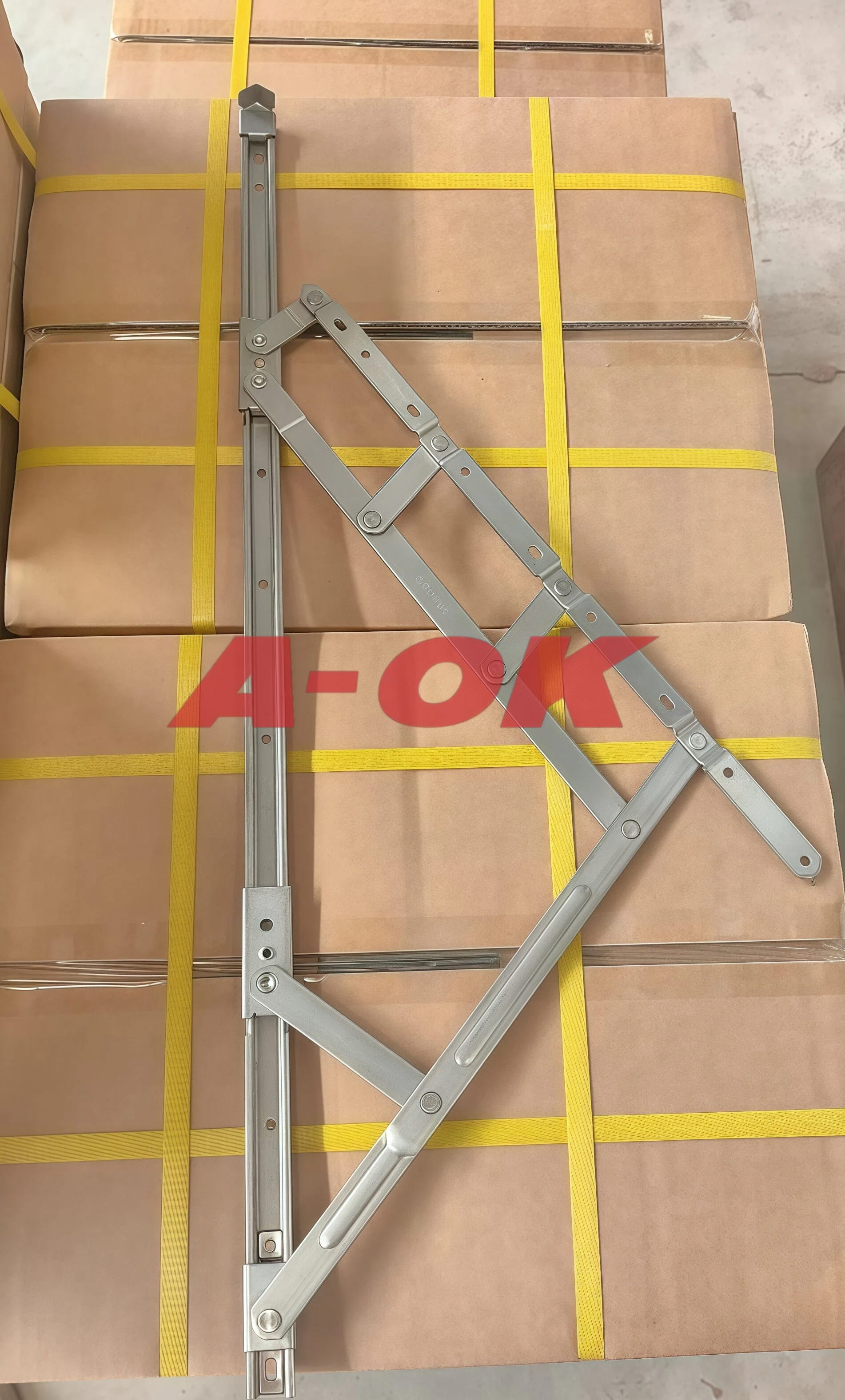
1. Sizing Based on Sash Dimensions and Weight
The golden rule of hardware specification is that the friction stay size must be directly proportional to the dimensions and weight of the window sash.
- Large & Heavy Sashes: Large commercial awning windows require longer stays (typically 16-inch to 24-inch) with a heavier stack height and thicker steel bars. This provides the necessary leverage to support heavy double or triple glazing and ensures stability against high wind pressures.
- Small & Standard Sashes: For smaller residential bathroom or ventilation windows, shorter stays (like 8-inch or 14-inch) are utilized. Using a stay that is too long on a small window will restrict its opening geometry and cause operational friction.
2. Opening Angle Requirements
Routine ventilation and tilt-and-turn (inward-opening): To ensure safety and prevent rainwater ingress, the opening angle is usually small, generally between 15° and 30°. In this case, side closure or protective measures are necessary.
Top-hung (fire exhaust): To ensure effective smoke exhaust area, the opening angle of top-hung windows is usually set between 45° and 60°. Relevant standards (such as the "Design Standard for Building Smoke Control Systems") indicate that when the opening angle is greater than 70°, the effective area can be calculated based on the window sash area; if the angle is smaller, the effective smoke exhaust area will be reduced.
Chain/push-bar window openers: Top-hung windows with a height of less than 800mm can usually open to 70 degrees.
3. Material Durability and Aesthetics
Beyond dimensional sizing, the material composition is non-negotiable. Because friction stays are constantly exposed to external elements and high mechanical stress, they must be manufactured from high-grade stainless steel (such as SS304 or SS316). Furthermore, modern architectural projects demand that hardware not only performs flawlessly but also integrates sleekly into narrow aluminum profiles without being an eyesore when the window is open.
Precision Engineered Friction Stays by A-OK
Ensuring you have the correct hardware size is fundamental to building a lasting window system. A-OK Hardware offers an extensive range of heavy-duty friction stays in multiple lengths and load capacities, engineered specifically for global aluminum profiles.
VIEW HARDWARE CATALOG