

Why the 10,000-Cycle Test Matters: Separating Premium Window Handles from the Rest
Hardware Standards | Engineering Excellence
The door and window handle is the most frequently touched component in any architectural project. Despite this constant physical interaction, handle failure—whether wobbling, jamming, or snapping—remains a major complaint for building managers. A failing handle is not just an inconvenience; it is a security vulnerability and a sign of poor material specification.
At A-OK Hardware, we believe the difference between a handle that fails in two years and one that performs flawlessly for two decades comes down to a single, critical benchmark: the DIN EN 13126 endurance test, which mandates a minimum of 10,000 cycles without functional degradation.
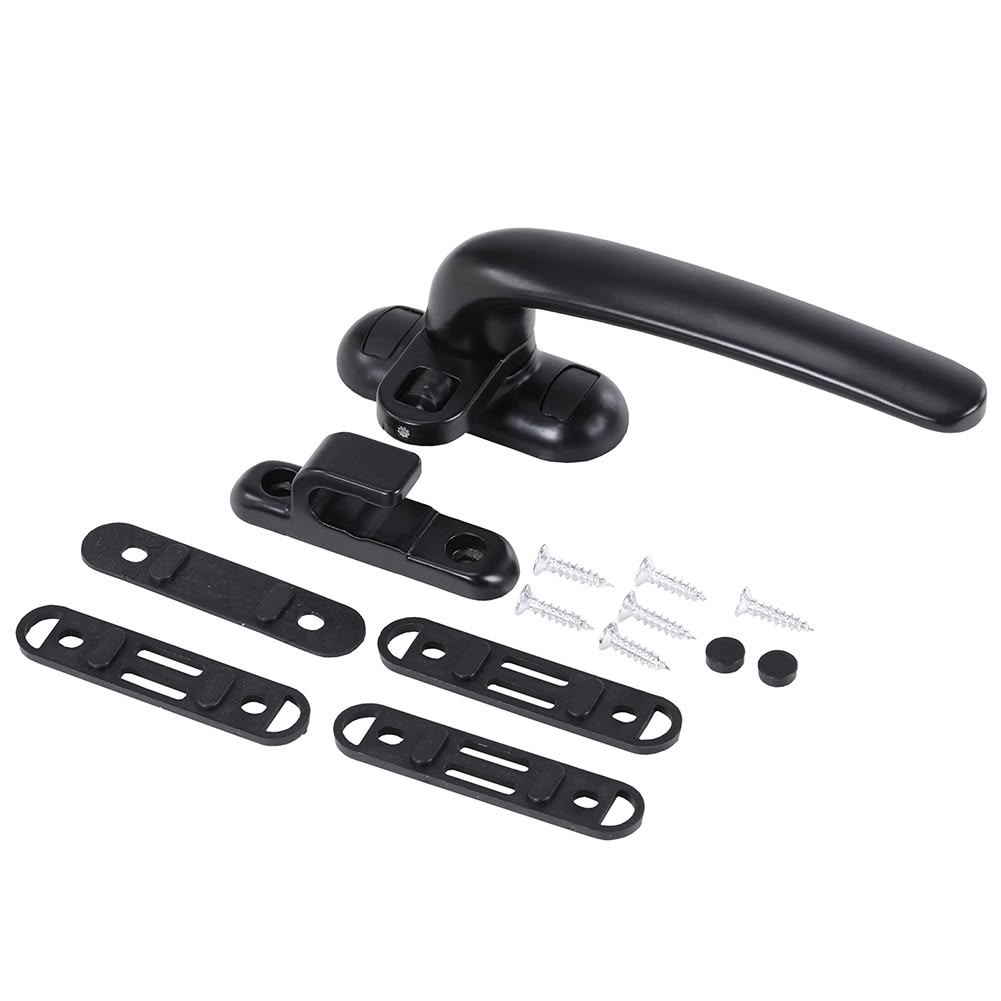
1. The Mechanics of Handle Fatigue
Every time a door and window handle is operated, it experiences a complex loading sequence. The user grips the lever, applies torque to overcome the multi-point locking mechanism, rotates it, and releases. This sequence generates cyclical stress at every load-bearing interface. The spindle experiences torsional shear stress, the lever acts as a cantilever beam with bending stress at the base, and the internal spring undergoes cyclic compression. Over time, these daily stresses contribute to cumulative fatigue damage. Premium engineering is required to withstand this constant punishment.
2. Understanding the 10,000-Cycle Benchmark
The DIN EN 13126 standard establishes a rigorous protocol to separate durable designs from premature failures. The handle is subjected to 10,000 complete open-close cycles under specified load conditions (typically 5 to 15 Nm torque). To pass, the handle must complete all cycles without fracture, permanent deformation, or functional degradation like excessive play. Additionally, a static overload test applies 20 to 30 Nm for five seconds to ensure the handle can survive abusive loads. A-OK Hardware strictly adheres to these testing protocols to ensure maximum reliability for B2B distributors.
3. Material Quality: The First Differentiator
The material dictates whether a door and window handle can meet the 10,000-cycle requirement. Premium handles are die-cast from high-strength aluminum alloys or Zamak 5, offering significantly higher tensile strength and hardness than budget zinc alternatives. Cheap handles often use zinc scrap remelted with uncontrolled impurities, creating brittle internal phases that act as crack initiation sites under stress. At A-OK, we utilize certified primary alloys to ensure structural integrity at the critical lever-to-rose transition zone.
4. Precision Die-Casting Processes
Manufacturing processes leave a permanent imprint on a handle's performance. Gas and shrinkage porosity are the primary enemies of die-cast durability, acting as internal stress concentrators. A handle with high porosity in the lever transition zone will fail prematurely. A-OK Hardware minimizes internal porosity through precise control of melt temperature, injection pressure, and cooling rates, guaranteeing that every batch meets commercial-grade standards.
Source Dependable Window Hardware
When specifying door and window hardware for large commercial or residential developments, the cost of premature failure far outweighs the initial investment in premium components. Partner with A-OK Hardware for handles engineered to outlast the competition.
View Our Hardware Catalog